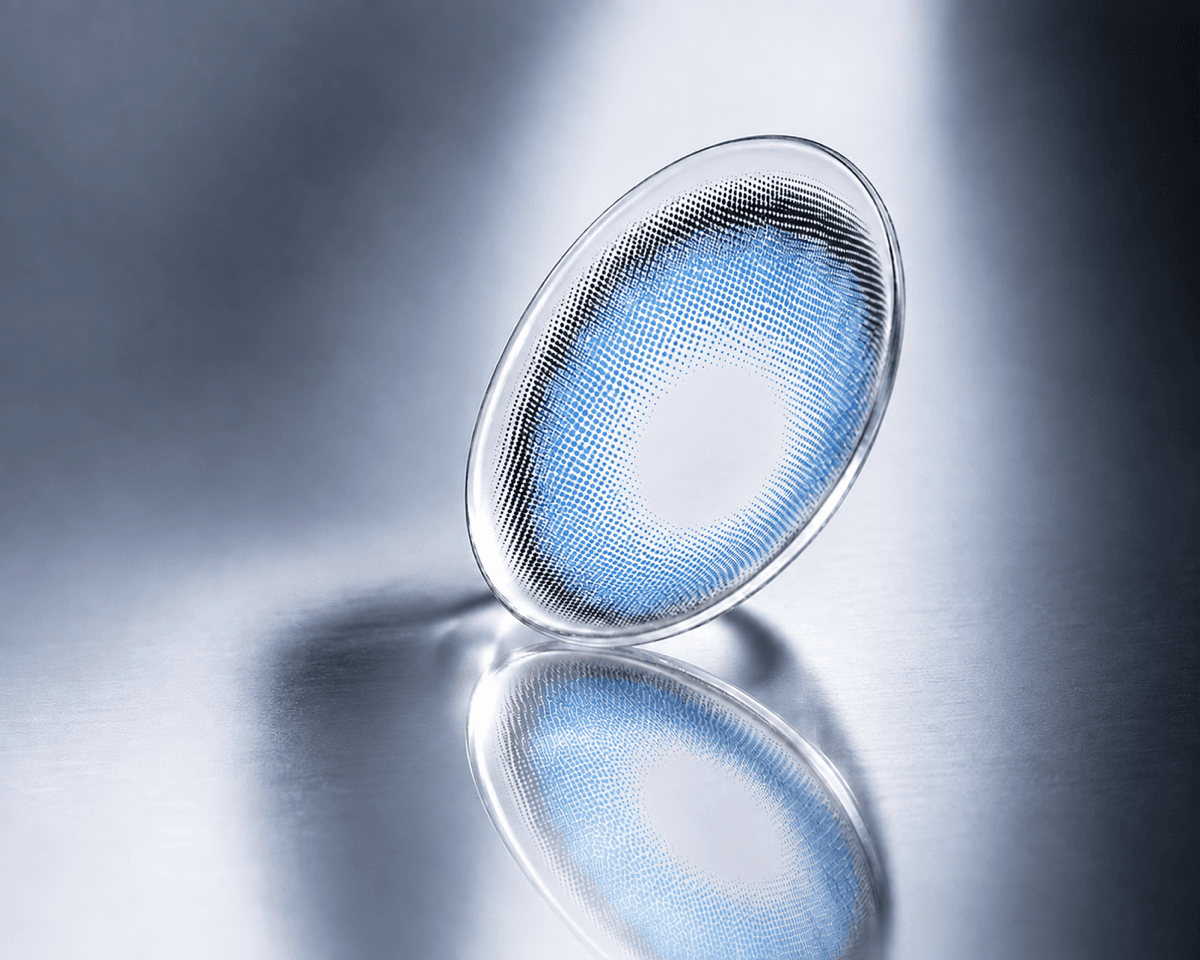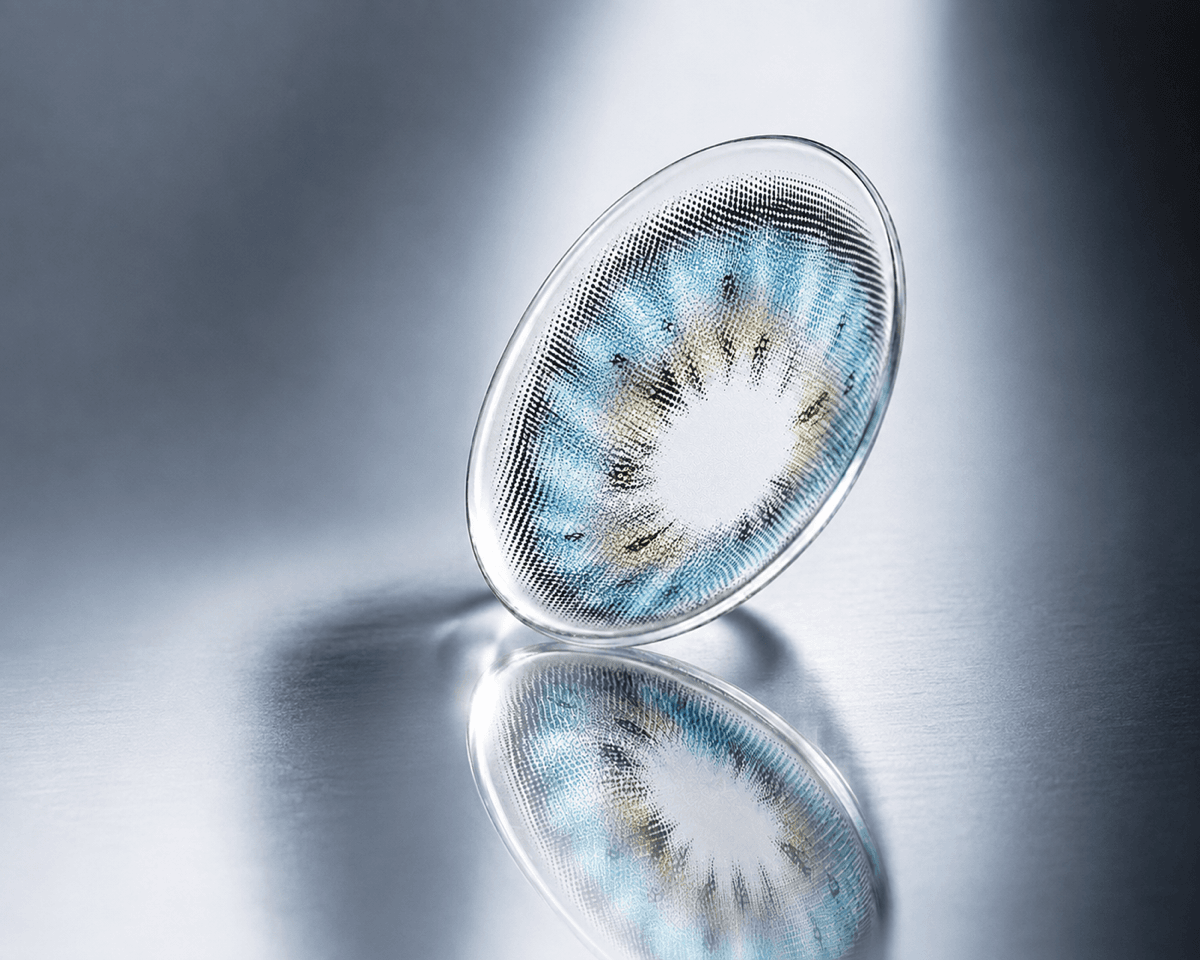
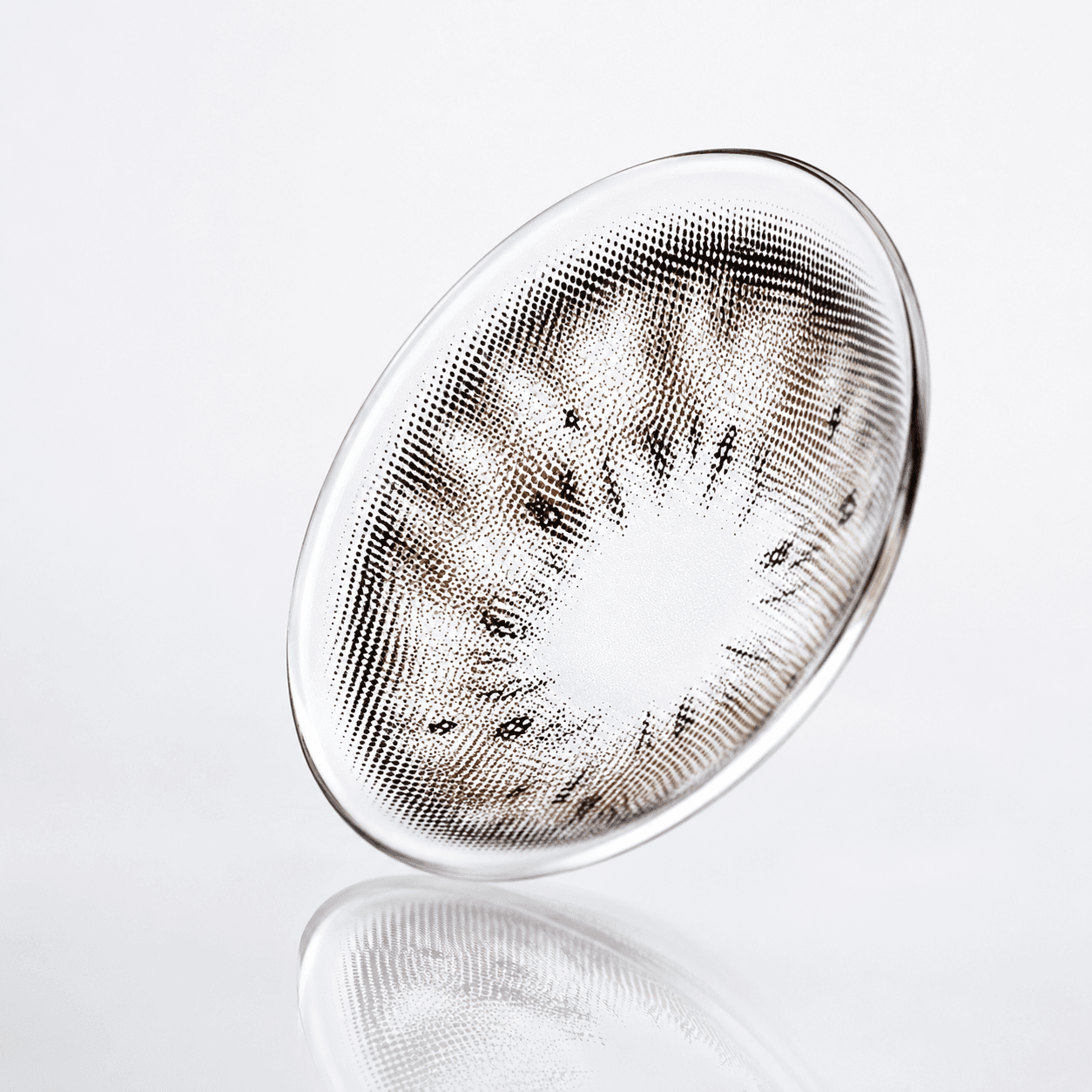
A dark iris absorbs light. A translucent pigment — the kind used in lenses meant to intensify light eyes — does not cover: it filters. Laid over an almost black base it has nothing to intensify, and the result swings between invisible and artificial.
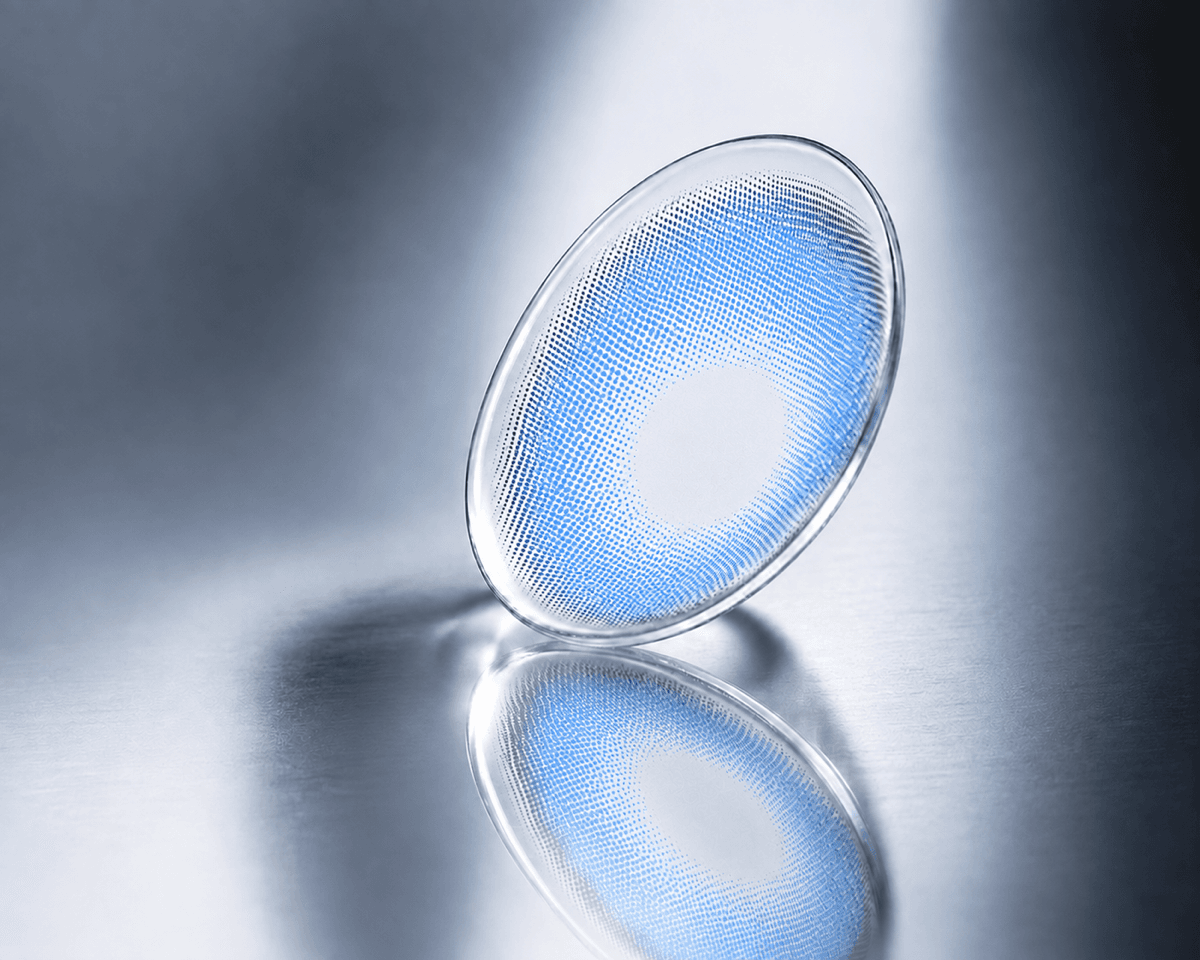
Born for dark eyes. Not adapted to them.
Most coloured lenses are designed for light eyes and then sold to everyone. Desìo lenses take the opposite route: every collection, in 1, 2 or 3 tones, is developed and tested on dark irises. If the colour works there, it works anywhere. That is why a Desìo lens transforms a dark brown eye naturally, with no doll effect and no greyish veil.

Why most coloured lenses fail on dark irises
The second mistake is flat construction. A single solid tint on a dark iris, even an opaque one, produces a uniform disc of colour that resembles no eye found in nature. It covers, but you can see that it covers.
Anyone with a dark brown iris who has already tried cheap lenses knows both outcomes. The problem was never their eye: it was a lens designed for a different one.
The Desìo difference: developed and tested on dark irises
Every Desìo collection starts from one design constraint: the pattern and the pigment load must cover a dark iris and still return a believable result. The pigments are opaque and calibrated to neutralise the underlying colour; the pattern reproduces the structure of a real iris, with its variations and its outline, so the new colour never looks painted on.
This holds for the whole range. There is no Desìo line "for light eyes" and another "for dark eyes": there are nine collections, all of which start from the same test bench, the hardest iris to colour. The practical consequence for anyone with dark eyes is simple: the question is not "which lens will cover me?", because they all do. The question is "how visible do I want it to be?".
Bold or subtle: how to choose your result
The range covers two spirits, and each design interprets them in its own way.
1 toneThe most subtle result:
A single tint, with no limbal ring, that shifts the colour of the iris while keeping a discreet look. On a dark eye the change is there and is noticed, but it stays the quietest in the range: the choice for anyone who wants a new colour that is believable at the office as well as over dinner.
1 tone
2 tonesDefined balance:
Full colour framed by the limbal ring, the dark edge that makes the gaze look larger and more intense. On a dark iris the outline prevents the flat effect and lets the colour read clearly even at a distance.
2 tones
3 tonesMaximum depth:
Limbal ring, dominant colour and an inner gradient inspired by central heterochromia: an iris rebuilt layer by layer, one that holds up to a gaze from thirty centimetres away. The most convincing realism in the range, even in radical colour changes.
3 tonesThree designs, one certainty: coverage. What changes is the character of the result.
Bold colours and subtle colours on a dark iris
Within each collection too, the choice plays out between two registers. Shades with a warm undertone, such as hazel, amber and olive green, blend with the residual colour of the underlying iris and with Mediterranean complexions: these are the colours of a change that whispers. Cool, light tones such as blue and grey create instead the strongest contrast with dark skin and hair: a declared effect, to be chosen deliberately.
There is no right choice: there is yours. Your optician can let you try both registers in a few minutes.
For the professional
The wearer with a dark iris is the most sceptical segment of the market, almost always through direct experience: a lens bought online that could not be seen, or that produced the doll effect. That past history is the opportunity, not the obstacle. The difference between a translucent pigment and a lens developed on dark irises is demonstrated in thirty seconds of trial at the counter, and it is a demonstration that e-commerce cannot replicate.
The sales argument changes: not "this line suits your eyes", but "the whole range is created on eyes like yours; let's decide together how bold you want the result to be". It moves the conversation away from coverage, which is guaranteed, and towards style, where the customer is happy to decide. The distinction to draw at the counter still holds, between "natural = discreet" (1 tone) and "natural = realistic" (3 tones): these are two different requests served by two different products.
Frequently asked questions
Do Desìo coloured lenses cover very dark eyes too?
Yes, all of them: every collection is developed and tested on dark irises, with opaque pigments calibrated to neutralise the underlying colour. Choosing between 1, 2 and 3 tones is about the intensity of the result, not about coverage.
Why are other coloured lenses invisible on dark eyes?
Because most of them use translucent pigments designed to intensify light irises: on a dark base there is nothing to intensify. What is needed is opaque pigments and a pattern built for the dark iris.
Will the result look fake?
Not if the lens was created for the dark iris: the pattern reproduces the structure of a real eye and the colour does not look painted on. The doll effect is typical of cheap single tints designed for other eyes.
Bold or natural colour on my dark eyes?
It depends on the result you are after: warm tones such as hazel and olive green blend with your complexion, cool tones such as grey and blue create the strongest contrast. A trial at the optician settles the choice in a few minutes.